
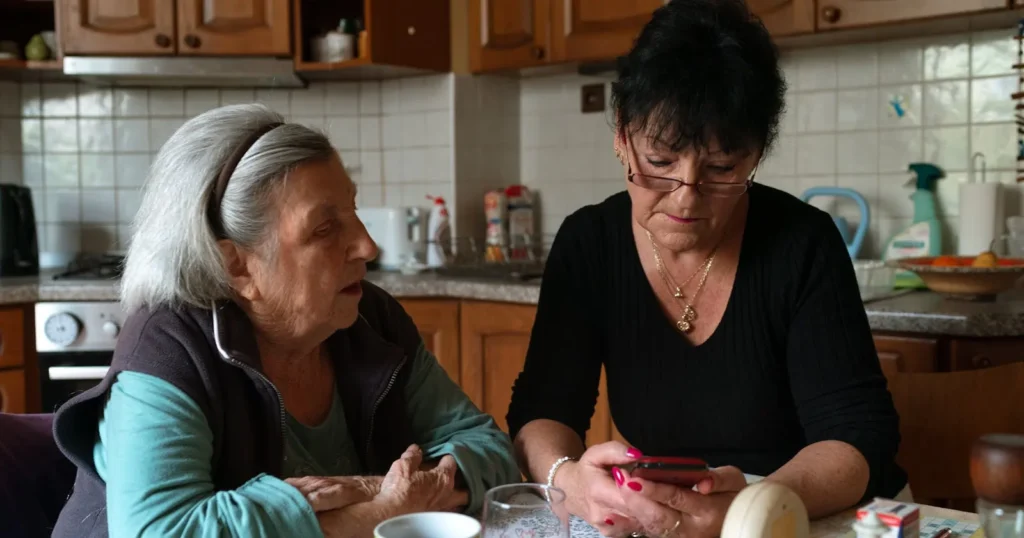
If the person you love has started shouting in the evenings, pacing the hallway, or pushing away the very help they need, it can be frightening and exhausting. You may be quietly wondering what happened to the parent or partner you knew. I want to say two things clearly at the start. You are not failing them, and they are not being difficult on purpose.
I am Sabbir Ahmed, a UKCP-registered psychotherapist and the clinical lead at Tidal Living, where we provide person-centred dementia care at home across London. The single most useful idea I can offer you is this. In dementia, behaviour is communication. When someone can no longer find the words, distress tends to come out as agitation, suspicion, or withdrawal instead. This guide explains why behaviour changes, what the common changes are, and practical things you can try at home, including what helps with sundowning and aggression, and when to ask for support.
In short, when someone with dementia becomes agitated, aggressive, or refuses care, the behaviour is almost always communicating an unmet need such as pain, fear, tiredness, or confusion, rather than being deliberate. More than 90 per cent of people with dementia experience these changes at some point, according to the Alzheimer’s Society. NICE advises understanding and addressing the cause first, before any medication. Most behaviour can be eased at home once you find the trigger.
Why does dementia change someone’s behaviour?
Dementia changes behaviour because it physically damages the brain, affecting how a person makes sense of the world, controls impulses, and communicates. As that ability fades, an unmet need such as pain, hunger, fear, or needing the toilet can no longer be put into words, so it comes out as behaviour instead. The behaviour is a message, not a choice; thus, it helps to hold on to one idea that ‘this is not a difficult person, it is a person in difficulty.’ Damage to areas such as the frontal lobes weakens the ability to plan, focus, and hold back an impulse, so reactions that the person would once have managed quietly now spill out. The common triggers are very human ones. Pain, an infection, hunger or thirst, being too hot or too cold, needing the toilet, boredom, loneliness, an over-busy room, or the frustration of a task that used to be easy.
One pattern is worth knowing because it is so often missed. A sudden spike in confusion or agitation, over hours or a day or two rather than weeks, is frequently a temporary medical problem such as a urinary tract infection, constipation, pain, or a medication side effect. The NHS advises checking for these first, and a same-week call to the GP is wise. More than 90 per cent of people with dementia experience behavioural and psychological changes at some point, so what you are seeing is common, not a sign that you are doing something wrong (Alzheimer’s Society).
A simple habit makes all of this easier. Keep a short trigger diary for a week or two. Each time behaviour flares, jot down what happened just before, the time of day, who was present, and how the person seemed physically. Patterns appear quickly, and they tend to point straight at the cause.
What behaviour changes are common in dementia?
The most common changes include restlessness and agitation, repeating questions or actions, sundowning, aggression, withdrawal or apathy, suspicion or seeing things that are not there, and a loss of the usual social filters. Most people show some of these and not others, and they often come and go rather than staying constant. The table below pairs each one with what it may be trying to tell you.
| Behaviour | What it can look like | What it may be communicating |
| Agitation and restlessness | Pacing, fidgeting, following you from room to room (shadowing) | Anxiety, boredom, needing reassurance or the toilet |
| Repetition | Asking the same question or repeating an action | Anxiety, trying to hold on to a thought, needing reassurance |
| Sundowning | More confusion and distress in the late afternoon and evening | Tiredness, too little daytime light or activity, an unsettled body clock |
| Aggression | Shouting, swearing, or lashing out | Fear, pain, or feeling cornered or rushed |
| Withdrawal and apathy | Losing interest in hobbies, sitting passively for long periods | Low mood, overwhelm, or not knowing how to begin |
| Suspicion or hallucinations | Believing things are stolen, seeing or hearing things that are not there | Confusion and fear, or misreading the surroundings |
| Loss of inhibitions | Blunt comments or acting out of character | Reduced impulse control from brain changes, not lost manners |
Does the type of dementia affect behaviour?
Yes. The type of dementia shapes which behaviours appear and when, so it is worth asking the GP or memory clinic which type has been diagnosed. Knowing it helps you make sense of what you are seeing and what tends to help.
In Alzheimer’s disease, the most common type, memory loss usually comes first and behaviour changes tend to build gradually. In frontotemporal dementia, personality and behaviour often change early, before memory is badly affected, which can be bewildering for families who are told it is dementia yet see few memory problems at first. In dementia with Lewy bodies, visual hallucinations, marked sleep disturbance, and confusion that fluctuates from one hour to the next are common. In vascular dementia, mood changes such as low mood, tearfulness, or irritability can be prominent. None of this is a fixed rule, and many people have a mix of types, but it gives you a useful map of what to expect rather than being caught off guard.
What is sundowning, and how can you ease it at home?
Sundowning is a spell of greater confusion, anxiety, and restlessness that tends to arrive in the late afternoon and early evening. It affects about 20 per cent of people with dementia living at home, and is often driven by tiredness, too little daytime light or activity, hunger, or an unsettled body clock. A calm, predictable evening usually helps a great deal.
The pattern is usually worse on days with little to do and little daylight, which is why the most effective changes happen earlier in the day, not at the moment of distress. Dementia UK notes that sundowning affects around 80 per cent of people with dementia in care home settings, where routine and light are harder to control, which tells you how much a steady day at home can do. The checklist below gathers what tends to help and what tends to make the evening harder.
| What tends to help | What tends to make it worse |
| Daytime activity and time in natural light | A long, inactive day spent indoors |
| A gentle, predictable evening routine | A noisy or busy evening, or lots of visitors at once |
| A warm drink and a small snack before the usual dip | Caffeine or a heavy meal late in the day |
| Soft lighting that reduces shadows | Harsh overhead lighting and dark corners |
| Calm distraction (music, a familiar film, a hand to hold) | Arguing, correcting, or quizzing the person |
How do you respond to agitation and aggression?
When someone becomes aggressive, your first job is safety and your second is to look for the trigger rather than argue with the behaviour. Aggression in dementia is almost always fear, pain, or the feeling of being cornered or rushed, not malice. Staying calm, giving space, and lowering the pressure will do more than any attempt to reason in the moment.
In the moment, slow everything down. Lower your voice, take a step back to give physical space, and avoid contradicting or correcting. Validate the feeling rather than the facts, with something as simple as “I can see this is upsetting, you are safe with me”. If you feel unsafe, it is completely right to leave the room and let things settle. None of this is a failure on your part.
Afterwards, this is where the trigger diary earns its place. Was personal care rushed, was there pain, was the room too noisy or too bright, had a question turned into a quiz. Address the cause and the behaviour usually softens. This is also what the evidence supports. The NICE dementia guideline NG97 is clear that psychosocial and environmental approaches should come first, with medication reserved for severe situations. For more on this specific symptom, the Alzheimer’s Society guide to aggressive behaviour is a sound, free resource. If aggression is frequent or frightening, tell the GP, who will want to rule out pain or infection.
What can you do when someone refuses care, food, or washing?
Refusing help is rarely stubbornness. It is usually fear, a loss of control, pain, or simply not understanding what is being asked. The aim is to lower the sense of threat and hand back some dignity and choice, one small step at a time, rather than to win the moment.
With washing and personal care, warm the room first, protect privacy, and break the task into small steps with plenty of time. Offering a simple choice between two options can restore a sense of control, and on a hard day a flannel wash is perfectly good enough. With eating and drinking, try finger foods, smaller portions, and one food on the plate at a time, and check quietly for mouth pain or ill-fitting dentures, which are easy to miss. Keep mealtimes calm and at the same time each day.
If medication is refused, do not force it, as that tends to make the next time harder. Speak to the GP or pharmacist, because a different timing or form often solves the problem. When the person resists care from family in particular, it can help to bring in a calm, trained outsider, and our guide on talking to a parent about accepting care walks through that conversation gently.
How do you keep someone safe if they walk about or become restless?
Walking about often meets a real need, such as using up energy, looking for someone, needing the toilet, or relieving boredom. Safety comes from meeting that need and adapting the home, not from trying to stop the person or restrain them, which usually increases distress.
Give a safe, clear space to move, and build a daily walk and some activity into daytime so there is a healthy outlet for restlessness. Orientation aids help, such as a large clock, clear signs on doors, and familiar objects in view. Make the home safer by keeping locks out of the direct sight-line, removing trip hazards, and using a stair gate if needed. It is also worth knowing about the Herbert Protocol, a simple form you keep at home with a recent photo and key details, which helps the police act quickly if someone does go missing. Where needs are high and walking at night is a worry, live-in dementia care can provide a steady, familiar presence around the clock.
What helps in the long run?
Beyond the moment, the most effective approach is person-centred. A predictable routine, a calm environment, and meaningful daily activity prevent far more distress than any quick fix, and the evidence says medication should be a last resort rather than a first one. Small, consistent changes are what move the needle.
Keep the same broad shape to each day, because routine reduces the fear that comes from not knowing what happens next. Keep the environment calm and uncluttered, with good light and less background noise. Build in meaningful activity that fits the person, such as a familiar hobby, music from their youth, folding laundry, or looking through old photographs. At Tidal Living we also use Cognitive Stimulation Therapy, a structured and evidence-based set of themed activities that gently support memory and engagement.
Looking after yourself is part of the treatment, not a luxury. In the Alzheimer’s Society lived experiences survey of around 3,500 people, 70 per cent of unpaid carers said their own mental or physical health had suffered, so accepting help early protects two people, not one. Where medication is considered, NICE advises the lowest effective dose for the shortest time, reviewed at least every six weeks. If you are weighing up the options, our guides on what Alzheimer’s home care includes and care at home compared with a care home may help you think it through.
When should you get professional help?
Speak to the GP if behaviour changes suddenly, if you suspect pain or an infection, or if you or the person no longer feel safe. You do not have to wait for a crisis, and you do not have to cope alone. Seeking help earlier usually means an easier road for both of you.
The GP can rule out pain, infection, delirium, and medication side effects, which are common and treatable causes of a sudden change. For day-to-day worries, a dementia specialist nurse can be a lifeline, and trained person-centred home care can take the pressure off so that family can go back to being family.
What To Learn
The behaviour you are coping with is not your loved one being difficult. It is your loved one in difficulty, trying to tell you something they can no longer say in words. That reframe changes everything, because once you start asking what the behaviour is for, you can usually find a way to ease it.
Behaviour is communication; look for the unmet need behind it, and keep a short trigger diary to spot the pattern. Routine, a calm environment, and meaningful activity prevent more distress than medication, which the evidence says should be a last resort. Finally, you do not have to do this alone, and asking for help early protects you as well as the person you care for.
Frequently Asked Questions
Why does dementia make someone aggressive?
Aggression in dementia is almost always a response to fear, pain, or feeling cornered or rushed, rather than deliberate. The brain changes reduce impulse control, so distress can spill out as shouting or lashing out. Staying calm and finding the trigger usually helps more than reasoning in the moment.
What is sundowning in dementia?
Sundowning is a spell of greater confusion, anxiety, and restlessness in the late afternoon and evening. It affects about 20 per cent of people with dementia at home. It is often driven by tiredness, too little daytime light or activity, and an unsettled body clock, and a calm evening routine helps.
How do you calm a person with dementia?
Slow down, lower your voice, and give space. Validate the feeling rather than correcting the facts, for example “I can see you are worried, you are safe”. Reduce noise and bright light, offer gentle distraction or a familiar comfort, and look for an unmet need such as pain, hunger, or the toilet.
What should you do when someone with dementia refuses to wash or eat?
Treat refusal as fear or loss of control, not stubbornness. For washing, warm the room, protect privacy, go one step at a time, and offer a simple choice. For eating, try finger foods and smaller portions, and check for mouth pain. If it continues or weight drops, speak to the GP.
When should dementia behaviour changes be seen by a doctor?
See the GP if behaviour changes suddenly over hours or days, if you suspect pain or an infection such as a UTI, if there is rapid weight loss, or if you or the person are no longer safe. Sudden change often has a treatable medical cause, so it is always worth checking.
Sources and further reading
- Alzheimer’s Society, Behaviour changes. Retrieved 5 June 2026.
- Alzheimer’s Society, Aggressive behaviour and dementia. Retrieved 5 June 2026.
- Dementia UK, Sundowning (Admiral Nurse Helpline 0800 888 6678). Retrieved 5 June 2026.
- NHS, Coping with dementia behaviour changes. Retrieved 5 June 2026.
- NICE guideline NG97, Dementia: assessment, management and support. Retrieved 5 June 2026.
- Alzheimer’s Society, How many people have dementia in the UK. Retrieved 5 June 2026.
About the author: Sabbir Ahmed is a UKCP-registered psychotherapist and the clinical lead at Tidal Living, a CQC-registered home care service in London specialising in person-centred dementia care. This article is for general information and is not a substitute for individual professional advice.